
Cities Are So Weird
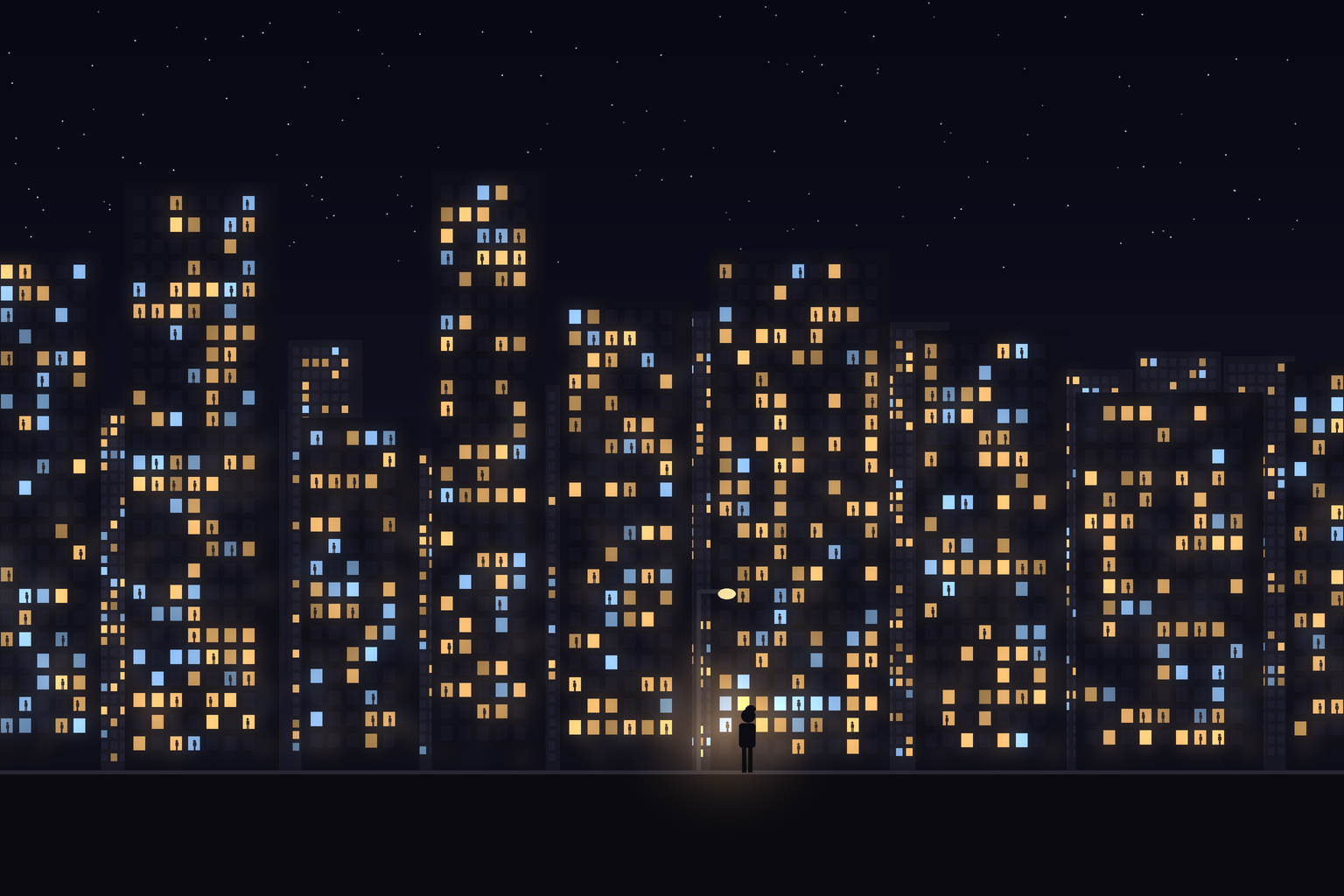
Cities are so weird.
I love them. I really do. There’s always something going on. Food at 2 AM. Music coming out of somewhere. A guy walking a cat on a leash. You can’t get bored in a city.
But sometimes I’m walking through one and it feels fake. Like a movie set. Like everybody’s an extra and somebody’s gonna yell cut.
Which is crazy, right? A city is the most alive place there is. Millions of people, all doing real stuff, all at once. How does that feel fake?
I think I figured it out. The life isn’t fake. It’s just not for you.
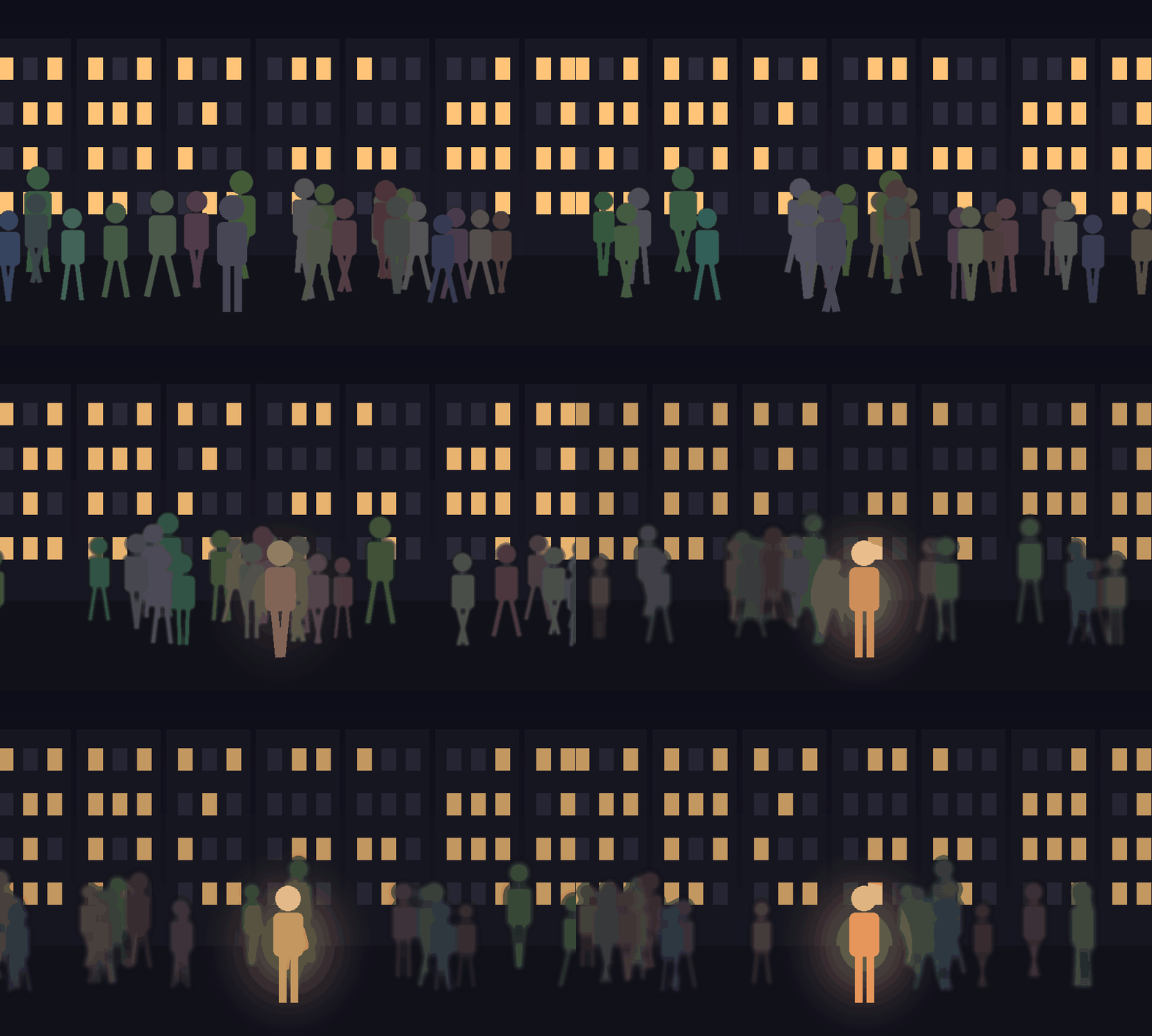
There’s this psychologist, Stanley Milgram. In 1970 he wrote a paper about what it’s like living in a city. And his whole idea was overload. There’s just too much. Too many people, too many faces, too much noise. Your brain can’t take it all in. So it starts throwing stuff out.
You give everybody less attention. You stop looking at faces. You stop hearing conversations. You tune it all down to background.
And that’s the fake feeling. It’s not that the people aren’t real. It’s that your brain turned them into background so you don’t explode. Every person you walk past has a whole life. A mom, a bad day, a thing they’re excited about. And you can’t hold eight million of those in your head. So you hold none.
It’s like playing a video game where the town is full of people walking around. They look real. They’re doing stuff. But you know they’re not really there for you. Except in a city, they’re all real. You just have to pretend they’re not.
Cities also make you faster. Like physically. Back in the 70s, a couple of researchers timed people walking in 15 cities and towns across six countries. The bigger the place, the faster people walked. Big city, fast feet.
And some scientists found that when a city gets bigger, almost everything per person goes up. Wages, new ideas, patents. Roughly 15% more for each person than you’d expect. So it’s kind of like a city is a machine that speeds people up. More of everything, faster.
Which is great for getting stuff done. But it’s hard to actually be somewhere when you’re moving that fast.
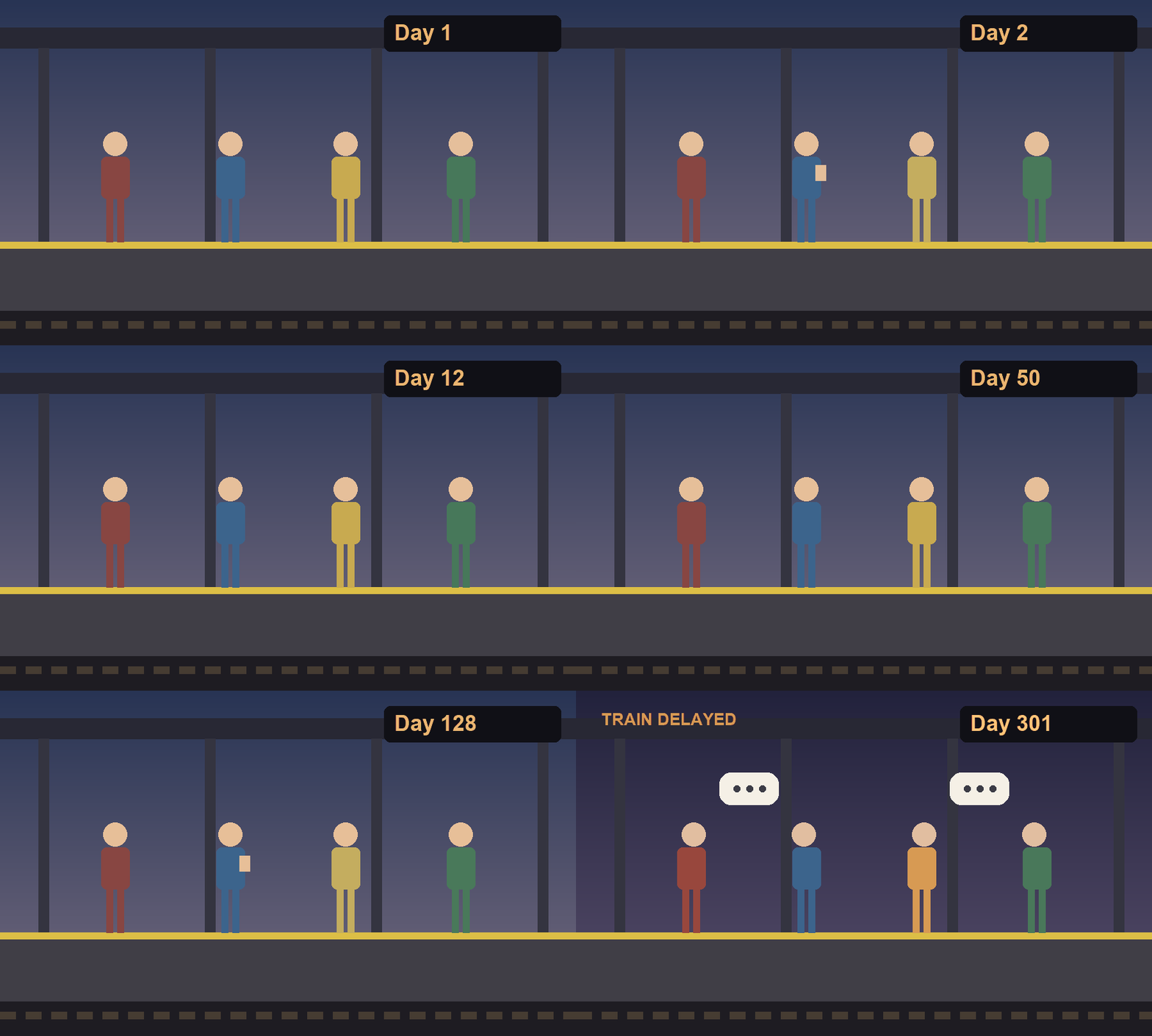
Milgram had one more idea that I think about a lot. He called it the familiar stranger.
You know the person. The one you see at the same bus stop, every day. Same coffee place. Same time. You know their face. You know their jacket. You’ve seen them a thousand times. And you’ve never said a single word to each other. And you never will.
His students went to train stations and asked commuters about it. Almost 90% of people knew at least one person like that. Somebody they’d seen over and over and never talked to.
That’s so weird to me. You know them. Kind of. But you’ve agreed, without ever saying it, to pretend you don’t.
And the funny thing is, Milgram said what usually gets familiar strangers to finally talk is when something breaks. A storm. An emergency. The train stops. Then suddenly everybody’s talking like they’ve known each other for years. Because they kind of have.
So I don’t think the city’s life is fake. I think it’s real life, happening a million times over, and none of it’s pointed at you. And that’s what makes it feel like a movie set. You’re watching everybody’s life. You’re just not in any of them.
Maybe that’s fine. Maybe that’s the deal you make for living somewhere with food at 2 AM.
But I think I’m gonna try something. Next time I see my familiar stranger, I’m gonna say hi.
Or I’ll probably just nod. That’s a start, I guess.
Anyway. Happy Halloween. Go see some strangers.
How this was written
This post was drafted from my notes by an AI model and then edited by me. The reasoning, decisions, and corrections are mine; the prose started from a machine. The underlying technical work this post describes is real.
Licensed CC-BY-4.0.